
Body Language and Mentalism
Simple tips that will change your life
I don’t know if you’ve ever watched the Mentalist series, but I strongly recommend you take a look. The difference between this detective series starring Simon Baker and Robin Tunney and others is that they solve the cases by utilizing the abilities of the CBI consultant who is a Mentalist . At the beginning of the series, the following explanation is made as the meaning of the word Mentalist.
Mentalist, (noun).
Someone who uses mental intelligence, hypnosis, and suggestion.
An expert in guiding thoughts and behavior.
For a person we can call a Mentalist to display the above-mentioned skills, they need to have trained themselves in suggestion, hypnosis, memory training, illusion, body language, psychology, and general knowledge. Explaining what mentalism is is not easy. There is a bit of everything. If you watch a few episodes of the series, a clearer picture may appear in your mind. The series “The Mentalist” played a big role in writing this humble post.
Here, I will first talk about “Body Language,” which is necessary information for reading people. I have just started reading various local and foreign sources on the subject, and I will try to transfer the information I learn whenever I find the opportunity.
Especially in recent years, interest in body language ( nonverbal communication ) has grown like an avalanche. It is possible to add a different color to life with simple methods that everyone can use in a spectrum ranging from personal relationships to professional business life. If you want, you can have fun watching the nonverbal communication - body language - between people while sipping your tea in a cafe. But when the subject is a personal skill, you must work to win it. Fortunately, our ability to use and read this natural language is innate. (Research shows that babies’ ability to recognize and distinguish faces is better than adults.) With just a little attention, training, and observation, you can create an awareness in your life with very simple methods. In fact, there is no need for modesty! You can change your life.
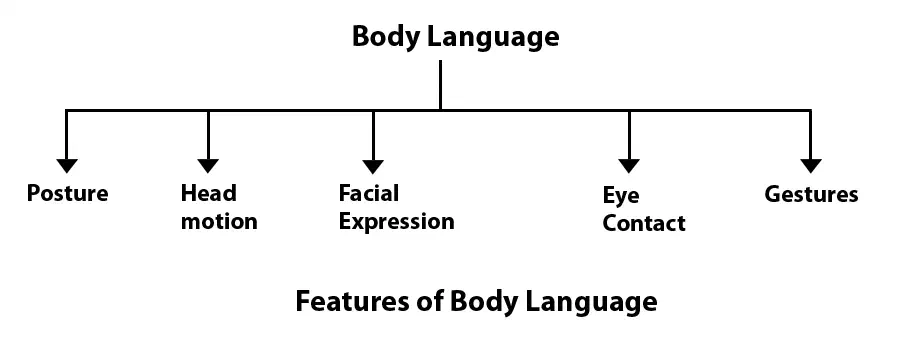
The 55/38/7 rule, which everyone accepts, emerged from the studies Social Psychologist Prof. Albert Mehrabian did in 1971 (which are considered the first scientific studies conducted on this subject). Three elements of mutual communication:
- 55% visual (gestures, posture, expressions nonverbal )
- 38% voice (tone of voice, change, intensity, vocal)
- 7% verbal (words used, verbal)
The above information shows that no matter how correct language you use, your speech may lose its meaning when appropriate visual or auditory messages are not sent. I want to point out appropriate visual or auditory messages in particular because these are the instruments we have in our mutual communication. Actually, it must be the irony of fate, the problem starts here. Because there are thousands of muscles in the body. Although we can generally control our hands and arms, it is impossible to consciously control the involuntary contractions caused by emotions - micro-expressions. For example, when you see someone you like, your pupils dilate and it is impossible for you to control this. Therefore, it is not easy to lie using body language. When you go to a cafe or bar, paying attention to body language, not just whether she drinks tequila or not, can help you achieve the result of which girl you have a better chance of going out with if you speak to her.☺ If you are a salesperson, it is not very difficult to predict where the result will lead by looking at the hands of the person opposite you.
Actually, there are many details of the subject. From applied psychology to limb system, from hypnosis to illusion and many more. I believe it would be wrong to think of mentalism as an academic study area or simple hypnosis, manipulation, or body language reading techniques. If you think of adding a bit of joy to our lives with applicable practical information as a goal, it will be easier to motivate yourself.
Body Language
Knowing the limits and secrets of the human mind and leaving people dumbfounded with mind games is not easy at all. If you think you will become a body language expert by reading this post, you are mistaken. Watch the video below and start by getting to know the place and impact of body language in our lives more closely.
The biggest mistake of us who are curious about this work is to evaluate the expressions and gestures in the person opposite us alone. The fact that the lady opposite us pulls her dress may be due to stress, excess weight, or a pain in her waist. In other words, we must not forget the fact that gestures and expressions in the person opposite us are not read-only signals. It is necessary to evaluate all movements/gestures/expressions in a unity, without ignoring the conditions required by the moment, in harmony with the environment and his/her other signals. I know that a laboratory environment is needed for such an evaluation. So be logical towards those around you and please do not say, “You blinked, you are a liar!” or anything like that.
You can find what gestures and expressions want to tell on the internet or in many books, but we often make mistakes when trying to use them in daily life. In fact, most of the time we cannot even read them. Because when talking to a person, we are mostly not used to listening to the person opposite us and giving him/her our attention. For this reason, the first thing we need to do is to observe. Both ourselves and the person opposite us.
To test your observation skills, watch the video below and evaluate yourself.
Yes, you saw that it is not as difficult as you think. Indeed, you can try it right now with someone at home or near you. An important point we must not forget is this: the formation of the body, gestures, or expressions is not random. A person keeping a secret keeping his/her mouth tightly closed when talking to you, children hiding their hands behind them when they lie, opening your arms when you see someone you love and your pupils dilating do not occur just by coincidence. Have you ever watched people getting into a fight? They protect their head area by raising their shoulders, or when you are in an insecure environment, what about our wanting to stand especially in the corner, backing ourselves up in a way, and expanding our field of vision as much as possible.
Actually, our subconscious evaluates all signals but we experience problems in realizing it. Just at this point, we also find the way to make our lives easier by consciously evaluating the person opposite us correctly with simple personal practices.
For example, if you are a salesperson, how do you know if it is worth pushing the person opposite you or not? (If the hands of the person opposite you are open or showing palms, it means you have a high probability of selling something. If his/her hands are closed or pointing index finger, I suggest you do not push your luck too much.)
Speaking of hands, let’s give a few more tips;
- Honest people show their palms more often.
- Children hide their hands when lying.
- People show their palms when explaining realistic reasons.
- People with hands in pockets are not open to chatting.
- People who bring their hands over their chest have entered defense psychology.
- Palm up -> Not threatening
- Palm down -> Authoritarian (remember Hitler)
- Clenching the fist -> Indicator of resistance
- Pointing finger is one of the annoying gestures for the other side. To avoid disturbing the person opposite you when talking, you can use bringing the fingers together or moving your palms up and down.
As you can see, these are things that are actually always in our lives. Whether we are aware of it or not, every gesture/expression/posture contains a message for us. Is it just a coincidence that the American president makes his speeches in front of a navy blue background? Or does it contain a hidden message sent to our subconscious?
I have no intention of going into conspiracy theories yet. It might be more appropriate if we start with simple and daily expressions. We all show our emotions with various facial expressions and we can tell what we feel even if we don’t say anything to the person opposite us. Most of the time this gives warning or approach signals for a person who wants to approach us.
Facial expressions we use most are: happiness, fear, anger, surprise, contempt, sadness, and disgust. It is very easy to understand if the person opposite us is acting by paying attention to a few simple details. For example, if the person laughing at our joke does not have wrinkles called crow’s feet around the eyes, we can understand that they are just grinning not to break our heart. Because the muscles there can only contract in a real smile. Anyway, without further ado, let’s move on to the images about facial expressions.
https://imgur.com/a/gsOv9
https://imgur.com/a/bjjtUrG
Of course, it is possible to find much more information on the internet. But since we have a rough information about facial expressions here, you can try to look more carefully at the facial expressions you encounter in your friends, on the internet, in your family. If we observe carefully, we practice what we have learned and start to notice the small details in between more.
Finally, since collecting resources about a subject takes time when focusing on that subject, I did some research for those who are curious. I added them below thinking you can also benefit from them.
With a rough search on the internet, there are some articles in scattered states. But none of them satisfies me. Already, people who are interested in mentalism need to be aware of this: very long and tiring studies are required to read, understand, and manipulate people. In fact, even these studies do not guarantee gaining this skill. Because environmental factors (social environment, ego, societal patterns, the experiences we have gained so far, etc.) prevent us from going outside some patterns. Anyway… It does not suit a beginner to talk too big. I’m just sharing my thoughts that I have acquired so far. Without extending the subject too much, let’s start doing a general resource search.
First of all, because our job is human, we must have a certain accumulation of knowledge on human psychology. I especially recommend the book HUMAN AND BEHAVIOR (Doğan Cüceloğlu), which contains academic information in a language everyone can understand.
Resources on Psychology:
- Human and Behavior (Doğan Cüceloğlu)
- Influence: The Psychology of Persuasion (Robert B. Cialdini)
- Marifetname (Erzurumlu İbrahim Hakkı) — Bedir Publishing
Resources on Body Language:
- What Every Body Is Saying (Joe Navarro)
- Body Language: How to Read Others’ Thoughts by Their Gestures (James Borg)
- Beden Dili (Mert Aydıner)
- The Body Language Bible (Judi James)
Resources on Memory Improvement:
- Mind Maps (Tony Buzan)
- Use Your Head (Tony Buzan)
- The Memory Bible (Gary Small, Gigi Vorgan)
Resources on Hypnosis and Suggestion:
- Hypnosis book for professionals (pdf) (Hakan Mengüç)
- Telkin ve Hipnoz ile Öğrenme Teknikleri (Adil Maviş)
- Hypnotism (Dr. Michael R. Hathaway)
- Auto-suggestion and Hypnosis (P. Clement Jagot)
Resources on Subconscious and Mind:
- Mind Reading Techniques (Stan B. Walters)
- The Power of Your Subconscious Mind (Joseph Murphy)
- The Power of Your Subconscious Mind (C. James Jensen)
- Bilinçaltının Büyüsü (Nilda F. Efeçınar)
Resources on Illusion:
- İllüzyon Sanatı (Kemal Cömertoğlu)
- Kolay Sihirler (Kemal Cömertoğlu)
- All the Secrets of Magic Revealed (Herbert L. Becker)
- Sihirbazlık (George Harryson)
That’s enough for now… At this hour of the night, this is all that can be done.
I haven’t added the online resources yet. There are also nice articles I read, but let them remain for now. I will update this page as I find the opportunity. If there are resources you have benefited from before, you can send them to us by commenting below. Thus, I would update the list faster.
Update (29.11.2018): When I wrote these posts, there were no informative YouTube channels about body language and nonverbal communication. Recently, a channel caught my eye and I wanted to share it. I will share informative resources and YouTube channels about the subject as I find time. If there are resources you benefit from, specify them in the comment section below and I will add them to the post.
https://www.youtube.com/channel/UCv1n_Pu4RY9XOdRc0116dBg
(I saw it appropriate to publish this article as a compilation instead of the mentalism and body language series I had previously published in four parts. I deleted my old posts.)